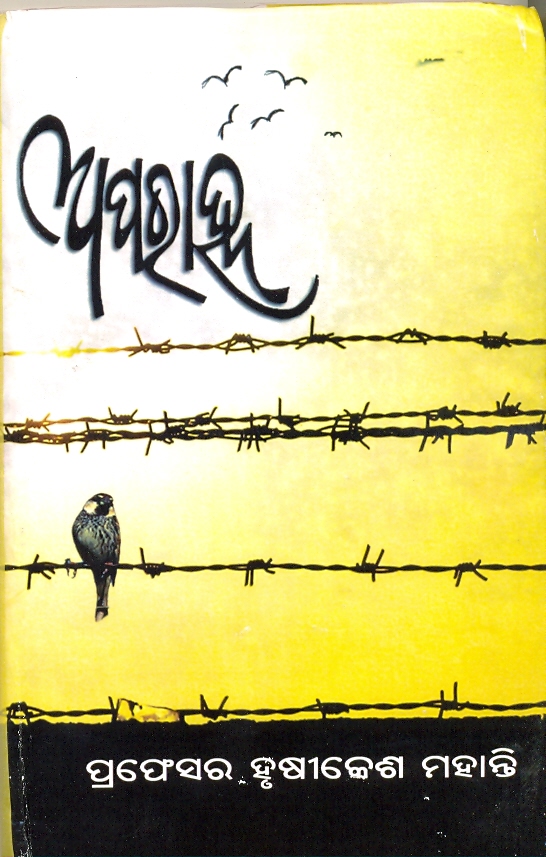
This is the English translation of the foreword to my Odia poetry book
Aparahna (The Afternoon). The foreword is by Mr.Ramaknta Ratha, an
Odia poet of eminence http://en.wikipedia.org/wiki/Ramakanta_Rath
...........................................................................................
The Light in Afternoon
...........................................................................................
The poet Sri. Hrushikesha Mohanty, himself has told of his intimacy with poetry in preface of this book. One day, the poetry knocked at his door and suddenly it came in. Since then everyday, during his walks in lonely nights, she comes; both keep talking while walking along in solitude. Then, both sit across the study table and keep talking. That makes the poet realize the self, the present and the future in a way, that is unique to him . The intimacy of a real poet with poetry is always like this. That relation is neither realized by the wish of the poet nor by his/her efforts; it happens at the wish of poems. Sri Hrushikesha is blessed for this realisation and intimacy with poems, that has come to him on its own .
The new style (of his expression) I told before is visible in plenty in this volume. The inner-self (KabyPurusha) has revealed itself again and again from traditional bounds and rituals. He has not completely wiped off the past rather understood the present and has made the both complement each other. It's not true the poetics has moved heavily towards self (individualism); for the poet, the personal relations have meanings. But that relation is very different than that what he had before. Now these are much more meaningful. It has pains of the past. One suffers while searching self in it. But one has to return to present. If life is a drama, one has to look for the scenes and the director of the drama. Unconvinced poet has indulged in self questioning . The poet is restless in self search and almost always in off-beat mood!
The poet who travels such a large space within him, has uttered self with his uniqueness How can it not be? He has not been writing poems for the sake of writing poems rather he has been obliging the loving calls of poetics. I congratulate the poet and wish him the best.
Aparahna (The Afternoon). The foreword is by Mr.Ramaknta Ratha, an
Odia poet of eminence http://en.wikipedia.org/wiki/Ramakanta_Rath
...........................................................................................
The Light in Afternoon
...........................................................................................
The poet Sri. Hrushikesha Mohanty, himself has told of his intimacy with poetry in preface of this book. One day, the poetry knocked at his door and suddenly it came in. Since then everyday, during his walks in lonely nights, she comes; both keep talking while walking along in solitude. Then, both sit across the study table and keep talking. That makes the poet realize the self, the present and the future in a way, that is unique to him . The intimacy of a real poet with poetry is always like this. That relation is neither realized by the wish of the poet nor by his/her efforts; it happens at the wish of poems. Sri Hrushikesha is blessed for this realisation and intimacy with poems, that has come to him on its own .
The new style (of his expression) I told before is visible in plenty in this volume. The inner-self (KabyPurusha) has revealed itself again and again from traditional bounds and rituals. He has not completely wiped off the past rather understood the present and has made the both complement each other. It's not true the poetics has moved heavily towards self (individualism); for the poet, the personal relations have meanings. But that relation is very different than that what he had before. Now these are much more meaningful. It has pains of the past. One suffers while searching self in it. But one has to return to present. If life is a drama, one has to look for the scenes and the director of the drama. Unconvinced poet has indulged in self questioning . The poet is restless in self search and almost always in off-beat mood!
The poet who travels such a large space within him, has uttered self with his uniqueness How can it not be? He has not been writing poems for the sake of writing poems rather he has been obliging the loving calls of poetics. I congratulate the poet and wish him the best.
Ramakanta Ratha
http://en.wikipedia.org/wiki/
http://en.wikipedia.org/wiki/